By Neale Van Fleet on February 18th, 2024
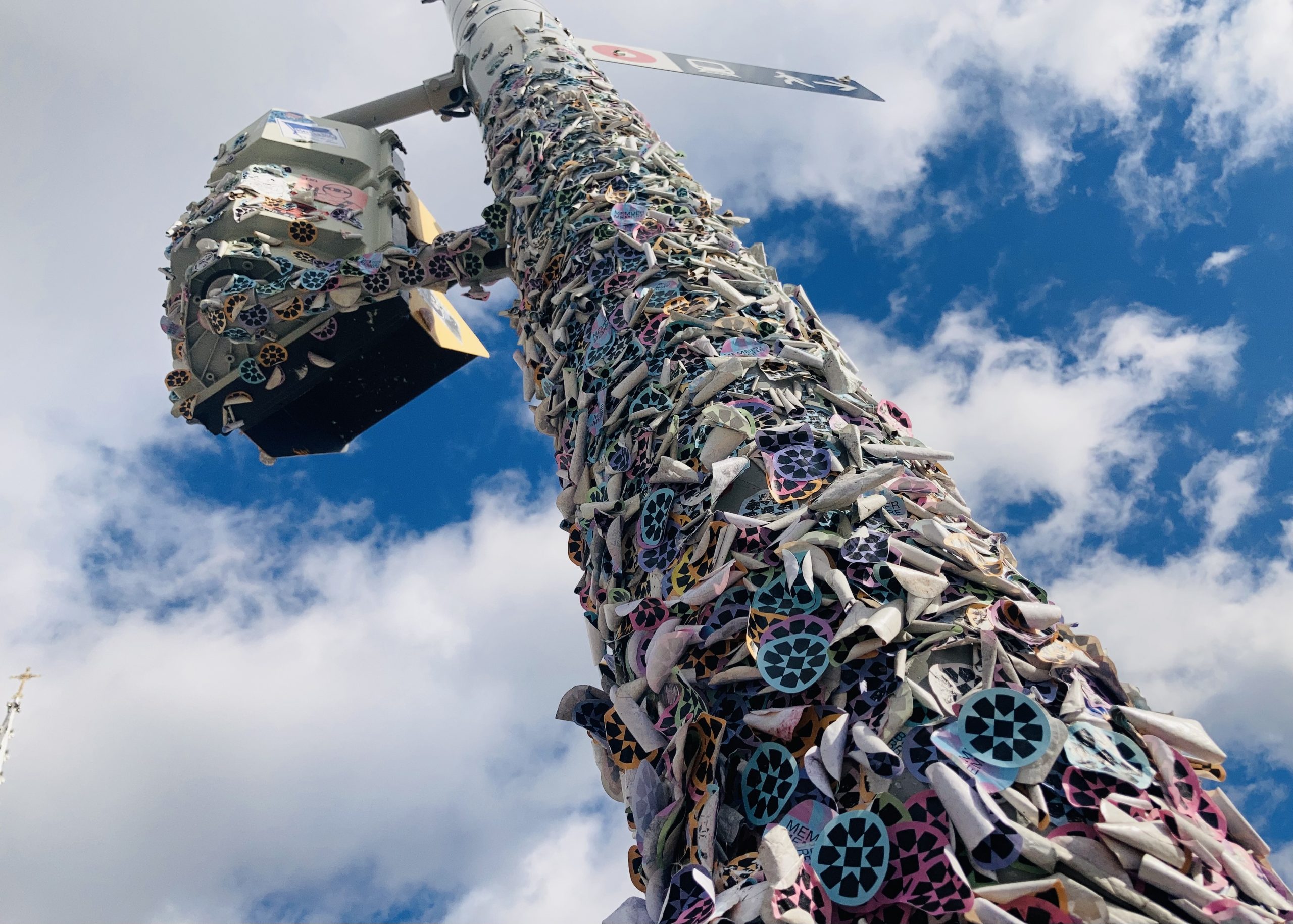
The National Gallery of Canada, in Ottawa, uses stickers as passes. Put one on your lapel and go inside. As a side effect of this, as people left the gallery they stuck them to the lamp post outside, which led more and more to do the same.
Taken during my autumn trip to Ottawa.
By Neale Van Fleet on February 14th, 2024
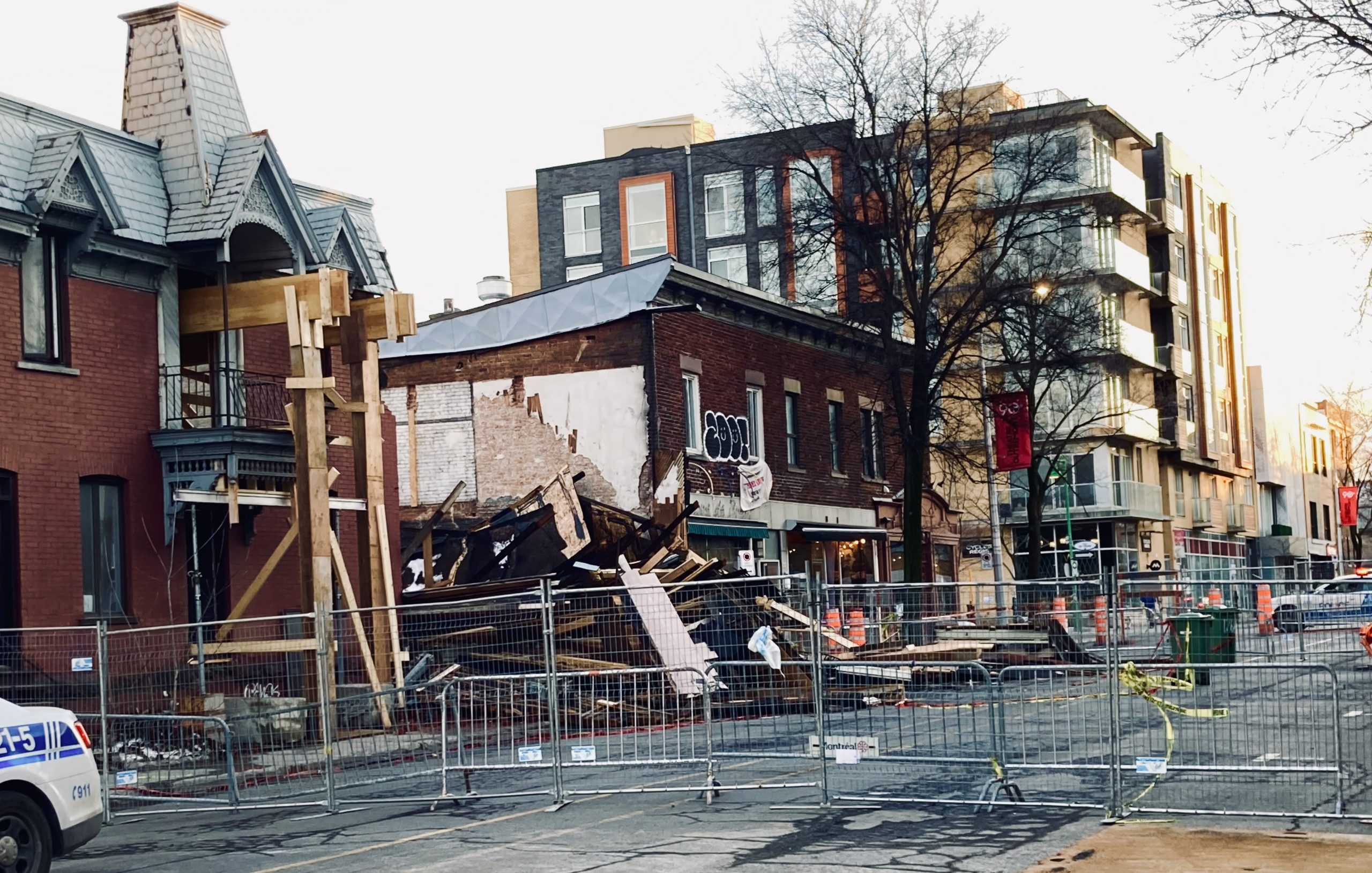
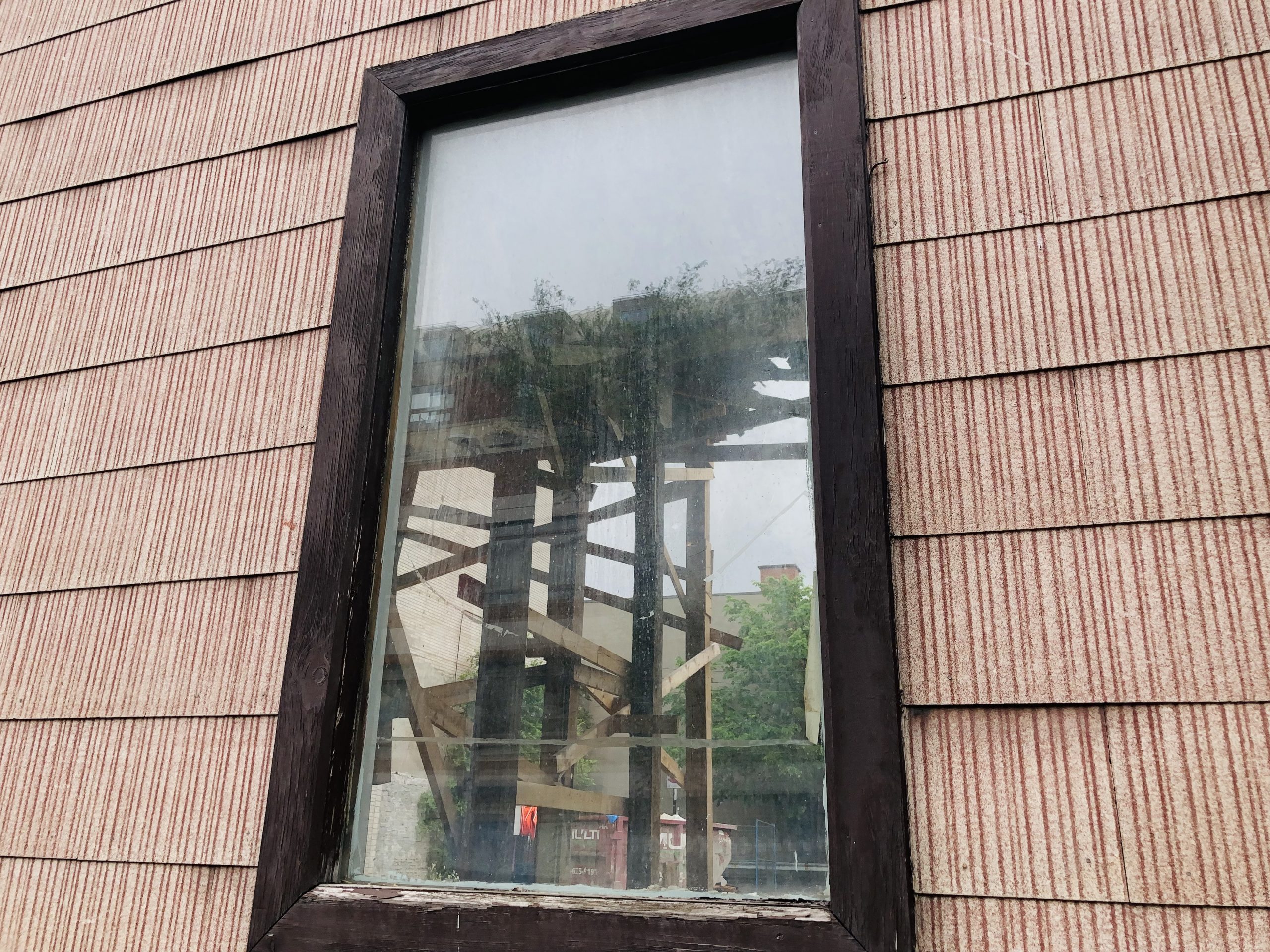
This facade of a building in my neighbourhood went and fell down this week. Last June I thought the whole thing looked precarious, and took this photo of the temporary structure:
By Neale Van Fleet on February 13th, 2024
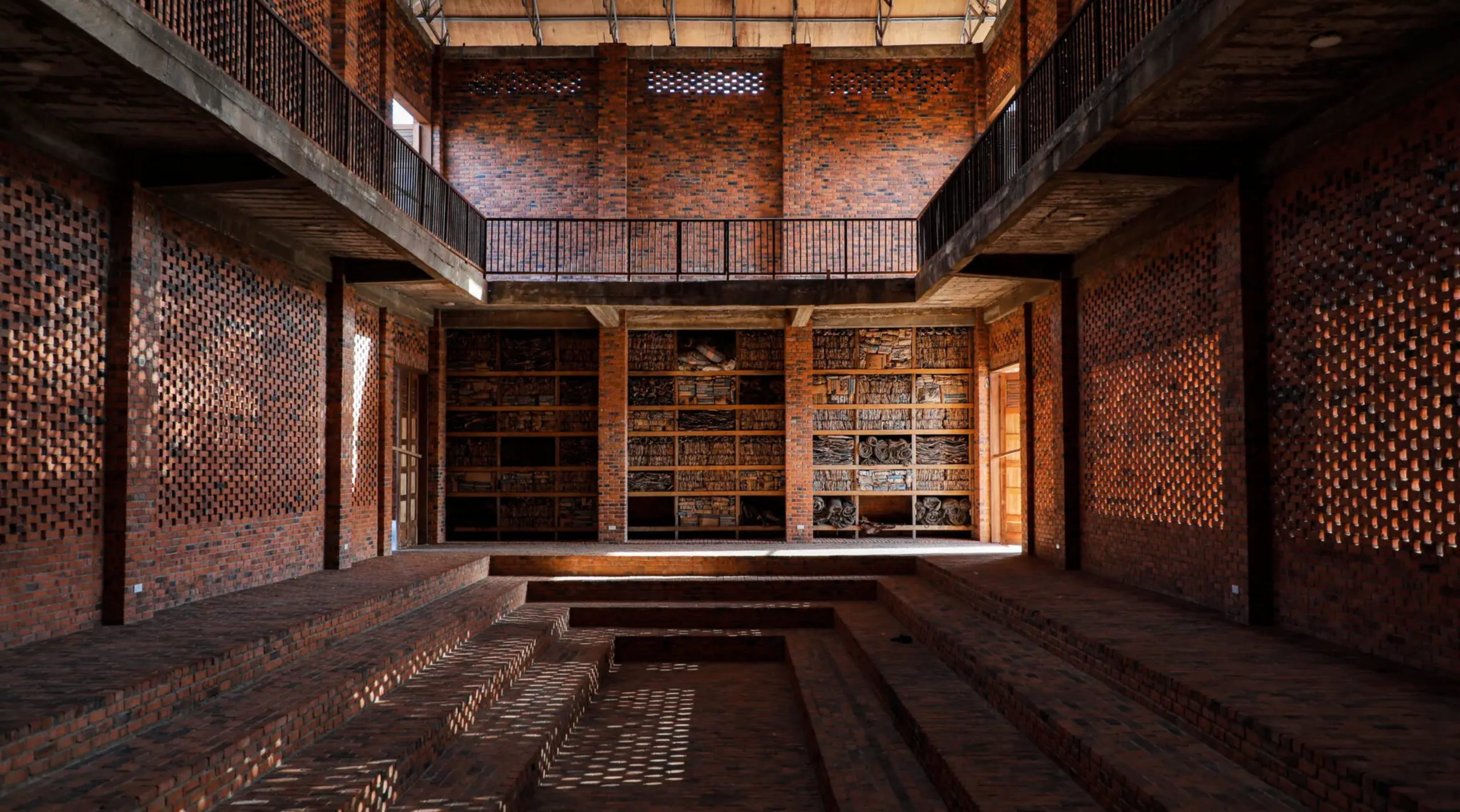
From this New York Times profile of art in Ghana comes this photo of a beautiful space created by Ghanaian artist Ibrahim Mahama, titled Parliament of Ghosts. What an incredible space.
By Neale Van Fleet on February 12th, 2024
By Neale Van Fleet on February 12th, 2024
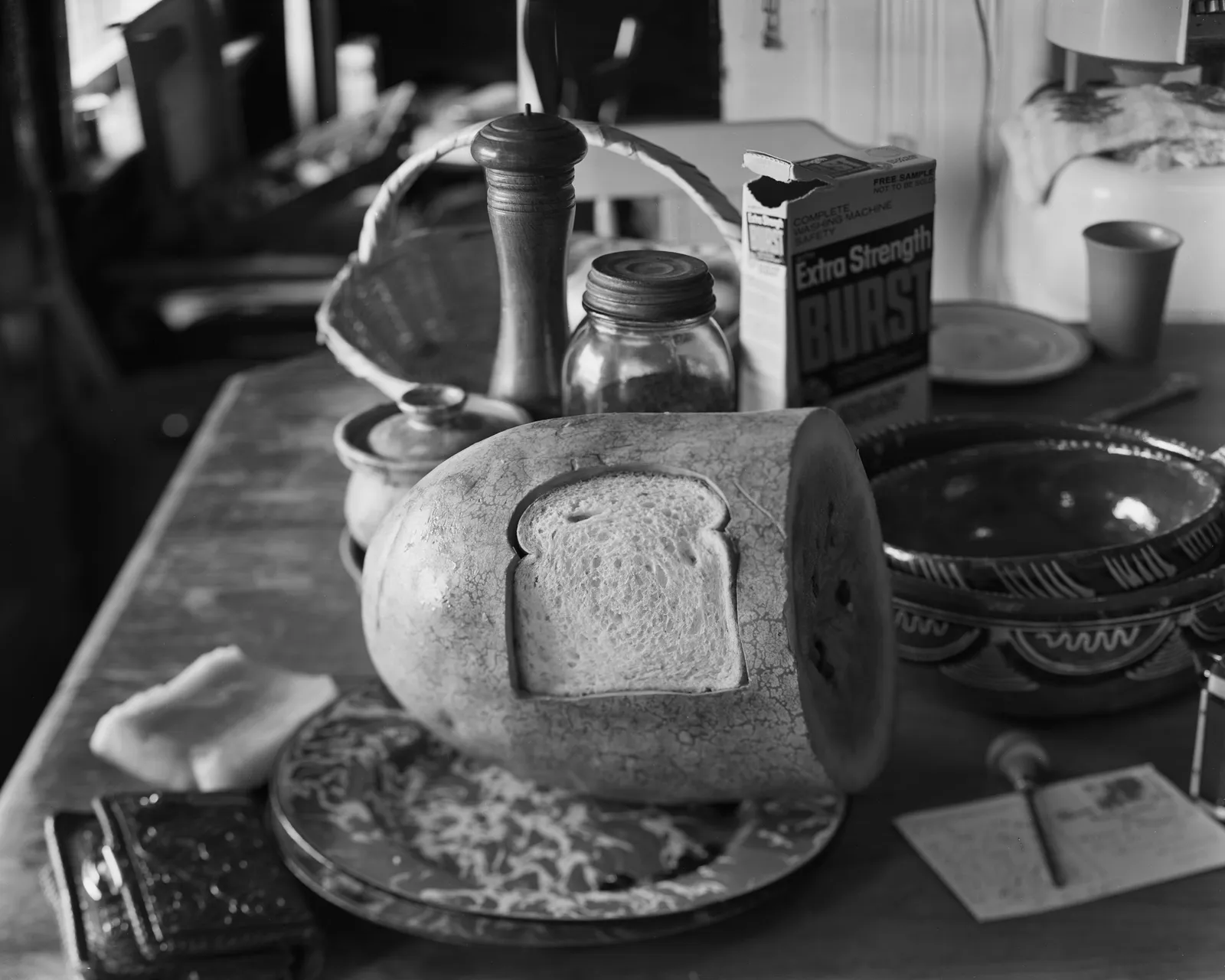
The New Yorker has a nice little profile on Robert Cumming, an absurdist photographer I had never heard about. His pieces are whimsical and silly, like the above piece entitled “Watermelon/Bread”.
As an artist, he was an inveterate tinkerer who, for a period, taught himself a new fabrication skill every year, which would later come in handy when making the props that he used in his photographs. He was stubbornly inquisitive, often following his ideas wherever they led him, even—or especially—if it was impractical or absurd.
Read More →
Via Rafa
By Neale Van Fleet on February 10th, 2024

By Neale Van Fleet on February 9th, 2024
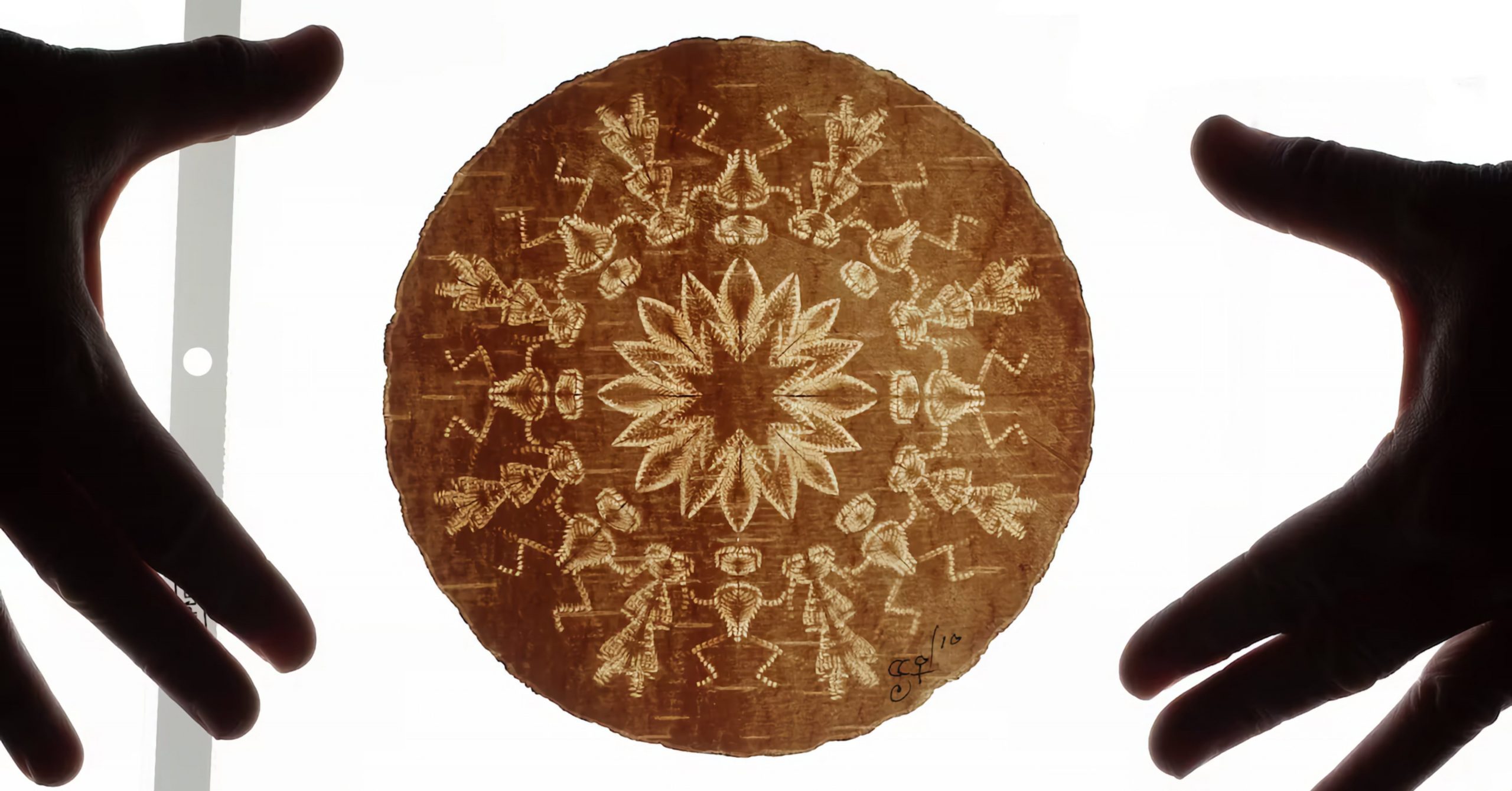
Photo by Hilary McDonald via Washington Post
During precontact days, birch bark biting was practiced mainly by women in tribes “wherever the birch tree grows,” Church says. That area is vast; it includes British Columbia, northwest Alaska, Washington state, the northern Great Plains, the Appalachian Mountains, the Great Lakes and New England. Tribes that have practiced the art form include some Algonquin peoples of the Great Lakes parts of Canada and the United States, Ojibwe, Pottawatomi, Abenaki, Odawa, Chippewa and some groups of Cree.
To create an image — a dragonfly, a flower, a hummingbird — artists use their eyeteeth (the sharp teeth also known as canines) to pierce the delicate, onion-thin skin just enough to make indentations. They move the piece around in their mouth, creating symmetrical shapes. They can’t see the results of their work until they unfold the bark and hold it to the light.
Read More →
By Neale Van Fleet on February 9th, 2024
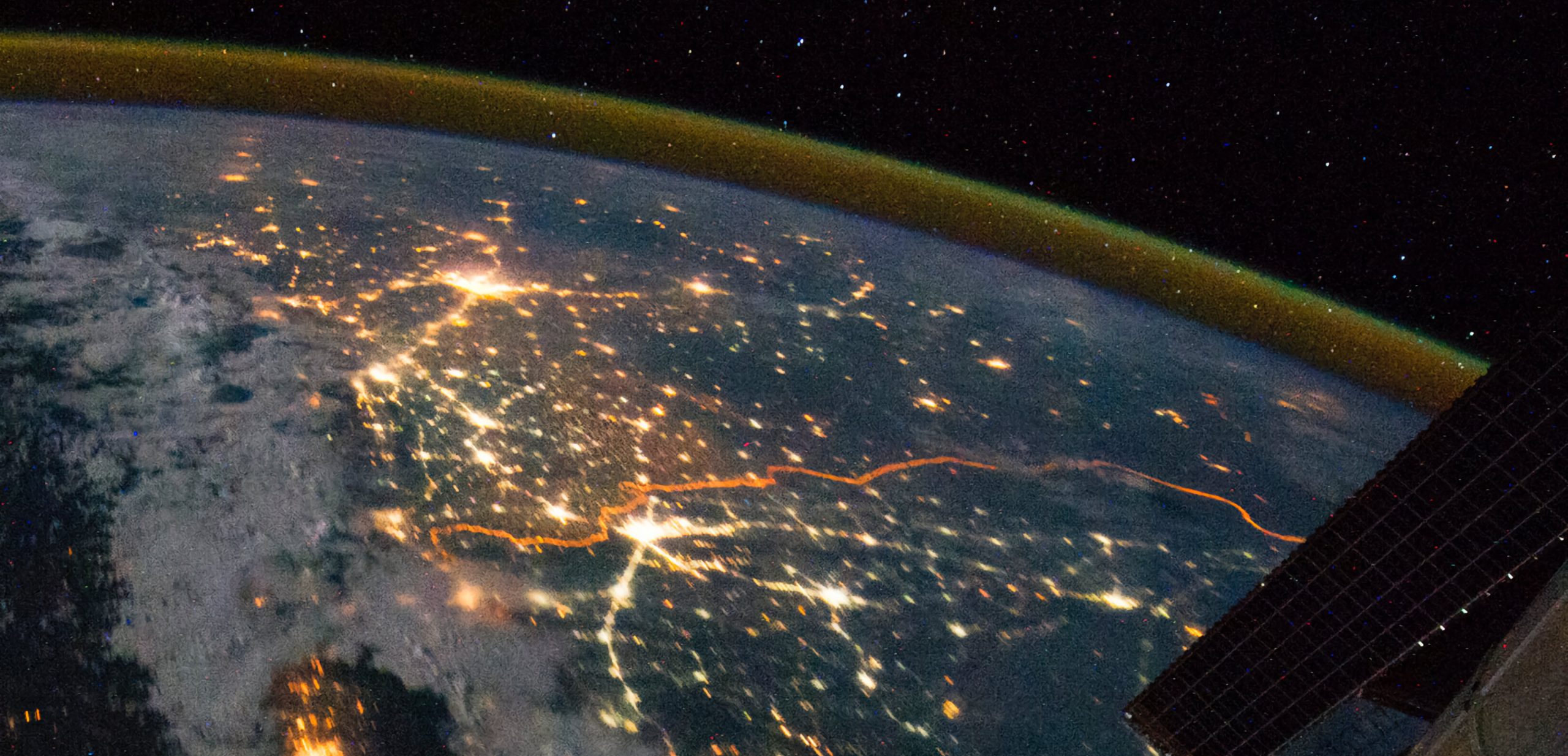
Today I learned that the heavily fortified border between India and Pakistan, a fenced-off no-mans land lit at night by arc lamps, is visible to the naked eye from space.
The above was taken from the ISS.
Via NASA →
By Neale Van Fleet on February 8th, 2024

Kyle Branchesi describes his project of creating digital imaginings of English landmarks as if taken over by cars thusly:
Amidst a political landscape where the ‘war on motorists’ is wielded as a populist tool, this series captures a future where this rhetoric has prevailed. The transformation of UK landmarks like Stonehenge into vast vehicular realms underscores the absurdity and danger of prioritizing short-term political gains over sustainable urban planning. These images mirror the contentious debates in the UK, challenging the narrative that prioritizes car ownership at the expense of public health and environmental sustainability.
See the entire gallery →
Via Kottke
By Neale Van Fleet on February 7th, 2024
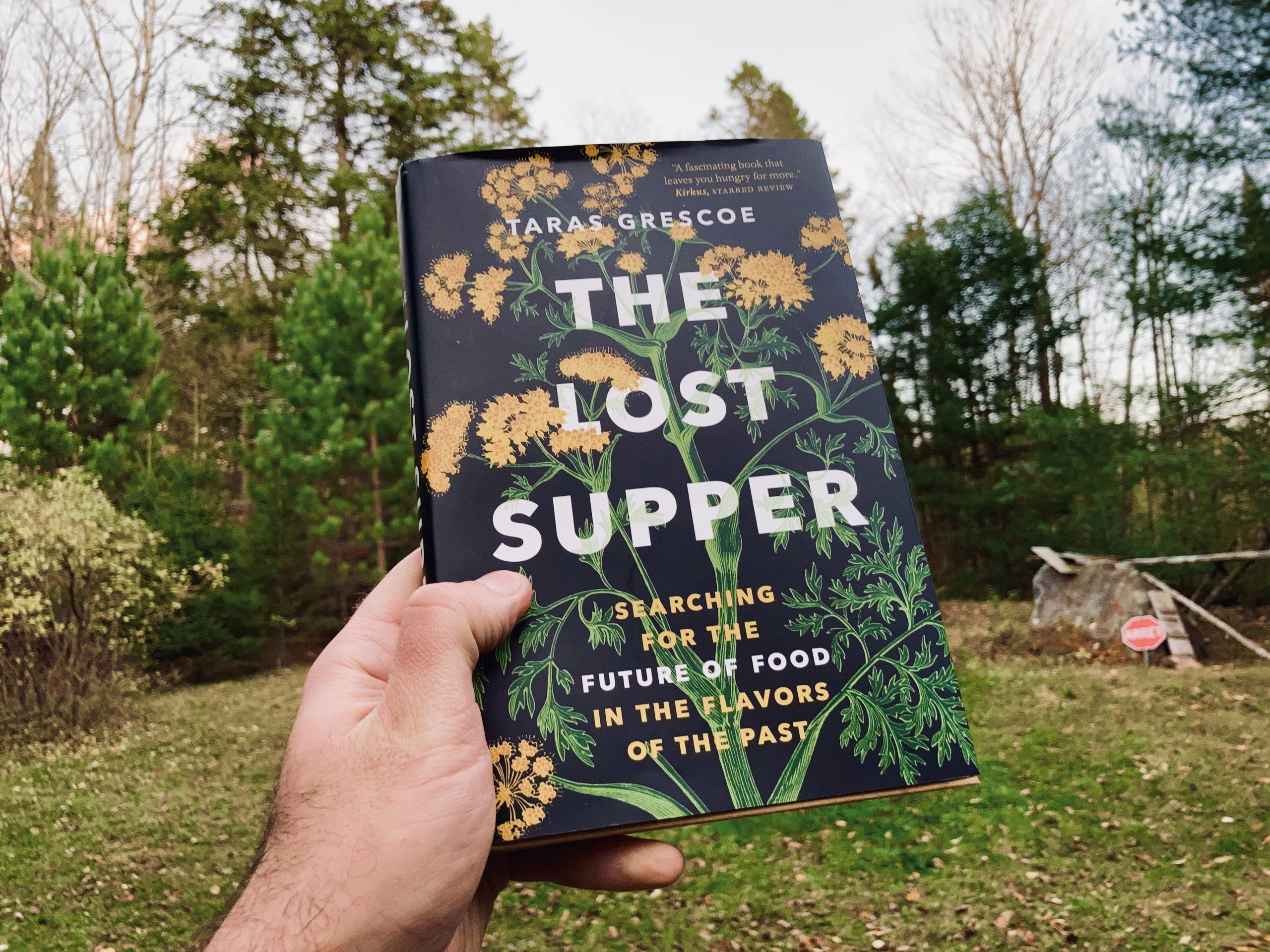
Friend of Elsewhat’s Taras Grescoe‘s new book, The Lost Supper, follows the author as he tries to track down foods which have been lost to history, or otherwise forgotten or neglected by humanity. His journey is also a lens through which he looks at our own modern diet and its various impacts.
This has changed my day-to-day relationship with food, in ways I hadn’t anticipated. Before this journey began, I flattered myself that, with my diet heavy on small fish, vegetables, grains, and pulses, I was one of the world’s responsible eaters. My thoughtfulness, though, was limited to my consumer choices the items I picked off the shelves of local stores and markets. Thinking about the past of food has made me think harder about what I eat in the present, and every trip has changed the way I cook and eat.
Among the lost food he looks at are Garum (previously mentioned on this blog). He also looks at the (mostly) lost practice of eating insects, which lead to this little jab at paleo dieters:
“Paleo dieters are one of my favorite groups to pick on,” Lesnik added, with a chuckle. “They don’t have any real knowledge of what the paleo diet actually was. I always ask them, “Oh, so you eat a lot of insects?’ Consistently eating almond milk and bacon is not reflective of any form of the actual paleo diet. Eating bugs is.”
This was a great little book which combined food history with some healthy reflection on our modern diets, combined with some neat detective work and travel writing that is definitely off the beaten path.